The
Courage to Enhance Your Posture and Movements!
Body
flexibility is the range of motion around a joint; meaning, the
body's ability to move joints throughout their full range of motion,
thus increasing muscle-usage and overall physical mobility.Body
flexibility is the general ability to swiftly move body joints while
harmoniously coordinating the use body muscles through the entire
rage of motion. Suppleness and flexibility in the joints can help
reduce injuries in all types of exercises, and enhances balance
and physical coordination. Regular flexibility exercises lubricate
and strengthen the muscles, joints and ligaments, leading to improved
relaxation and range of motions.
Get
Flexible Now!
Improving
Flexibility - Step by Step
Flexibility
plays an important role in our lives as we require it in our
daily activities like bending etc. It helps in keeping our
muscles mobile.
Flexibility
however decreases with age and so it is very important to
include flexibility exercises in your daily workout program.
Lower Back pains are mainly caused due to lack of flexibility
and bad posture/bad sitting at work places.
Lower
back pain are normally get cured by the stretching of lower
back which might although resemble to some people as unusual.
Click Here
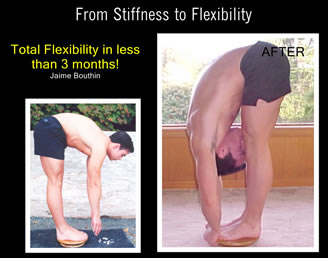
BODY FLEXIBILITY
Your
flexibility absolutely determines what movements you are able
to make and how fast, accurate, and powerful those movements
can be. Body flexibility and stretching exercises go hand in
hand. Stretching reduces the body's susceptibility to injury
and helps relax strained muscles. Flexibility enhance your posture
and body movements - Your posture naturally becomes upright
without any need for mental reminders to 'sit up straight' or
'stop slouching. Increases in flexibility and strength also
help to prevent future injuries.
BODY FLEXIBILITY BENEFITS
Promotes relaxation and muscular coordination
Reduces stress and fatigue
Increases blood circulation throughout the body
Relaxes sore muscles and reduces stiffness
Diminishes risk of injury
Enhances body movements
Increase the body's energy levels
Promote overall well-being of the body and mind
Improves posture
How
to Improve Your Flexibility?
To improve your flexibility, choose sports that lengthen the muscles
such as swimming, martial arts or a basic stretching workout from
Master Moves, Yoga or Pilates. Alternatively, consider joining classes
on tennis and dancing.
Many
people are unaware of the fact that the order in which you perform
your stretching exercises is important. Quite often, when we perform
a particular stretch, it actually stretches more than one group
of muscles: the muscles that the stretch is primarily intended for,
and other supporting muscles that are also stretched but which do
not receive the "brunt" of the stretch.
Ideally,
stretching should be done daily. Realistically though, most people
do not have the patience to stretch every day. A good goal is to
aim for 3 to 4, 15 to 20-minute flexibility sessions per week. Each
stretch that you do should be done slowly and held for 5 to 30 seconds.
One way of doing this is to hold the stretch at the point of tightness
for about 20 seconds and then push beyond this point (i.e. to the
point just before discomfort) for 10 extra seconds.
How
to measure Your Flexibility?
To measure body flexibility especially of the lower back and the
backs of the upper legs try the Master Moves Body Conditioning.
If you can perform all the exercises comfortably, your body flexibility
is good. Your next level is to achieve optimal flexibility. This
will require the practice of the Master Moves Body Flexibility program.
With daily practice, you can achieve optimal body flexibility in
3 months.
How to prevent injuries?
By keeping your whole body toned and flexible, you can prevent injuries
ranging from aches and pains to serious joint damage. When your
body is more flexible, it is better able to respond to the occasional
over extensionor
sudden twisting movement that might happen in the course of practicing
sports, dancing or daily activities.
Not surprisingly, lower body flexibility is the key to preventing
most running injuries. Runners should work on ankle, calf, hamstring,
quadriceps, hip, groin, and IT band flexibility. Flexibility for
running is important for two reasons: to prevent injury and to allow
for a full range of motion to generate maximum speed. While flexible
athletes are not always the fastest runners, inflexible athletes
are quite often injured runners. Therefore, it is necessary to maintain
at least a minimum amount of flexibility.
How
to enhance your body movements?
In the practice of sports, you need to be prepared not only for
the movements you expect to perform, but for the unexpected as well.
Each individual has unique goals, personal preferences, conceptual
metabolism abilities, and genetic make-ups qualities. To achieve
the best physical performance with sports, you must enhance and
sustain your body flexibility. Body flexibility will enhance your
body movements and should reduce the incidence of injuries.
Your
New Body is Here!
Most people begin
an exercise program designed for weight loss with the intention
of sticking with it. Unfortunately, the majority give up after
six months, deciding they simply don't have the time to exercise
regularly.
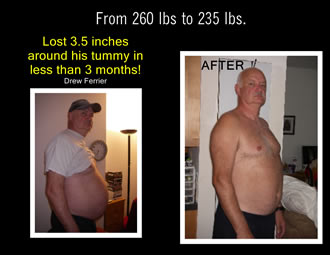
Losing
weight and keeping it off is a real challenge for most people. That's
why it's important to begin a weight loss program with the help
of fitness professional. We can help you find ways to decrease calories
but still consume the foods you enjoy. We can suggest daily exercises
to help you change old habits for new ones. It's important to remember
that losing even a relatively small amount of weight can make a
real improvement in reducing your risk for diabetes and other serious
conditions.
There
are three universal principles that apply to anyone:
balance, moderation and consistency.
With
all the different exercises programs and diets out there right now,
it's easy to become confused about what to eat. Pick up almost any
magazine and you will find an article on dieting or food. What I
find astonishing is that everybody seems to have a different answer.
Who do you believe? Everybody is different, so I cannot answer that
question. But I believe there are three universal principles that
apply to anyone: balance, moderation and consistency. For instance,
when we talk about following a diet: Balance means
getting the right combination of protein, carbohydrates, and fat
in your meals. Moderation means eating the correct
quantity of food required by your body to perform with great efficiency.
Consistency means developing the discipline to
follow your diet on a daily basis.
Balance
Carbohydrates
Carbohydrates are our primary source of energy; they should be carefully
selected and included in each meal. The average diet has too many
refined carbohydrates. Technology has increased the degree to which
foods are refined, and the result is too much low-fibre, high carbohydrate
food. Eat more unrefined carbohydrates such as whole grains, beans,
vegetables and fruits. Eat fewer refined carbohydrates such as flour
and sugar.
Protein
Most
people tend to neglect their protein consumption. Everyone (not
just bodybuilders!) needs protein to survive. Without protein, muscles
cannot repair and they begin to break down. Eat more protein from
sources like fish, chicken, turkey, and beans. Eat less protein
from high-fat sources of red meat and dairy products.
Fat Fat is essential. In the quest for a low-fat diet,
we have forgotten about essential fatty acids (EFA's), which are
the "good" fats. EFA's are responsible for numerous bodily functions.
The "bad" fats are the saturated fats; they are responsible for
heart disease and high cholesterol. Eat more EFA's from sources
like fish, nuts, seeds, and olive oil. Try to eat fewer saturated
fats from sources like butter, sunflower oil, and cheese. When one
of the above nutrients is missing or in excess, it creates an imbalance.
Finding a balance among carbohydrates, protein and fat is a personal
process. Some people have a higher metabolic rate and need more
energy from carbohydrates and fat. Others need fewer carbohydrates
because they have a sluggish metabolism. Experiment with different
ratios, but as a general rule, eat more carbohydrates than protein.
Moderation
The massive
quantity of food available makes it very easy to overeat. You have
to learn to eat portions that are the right size for your needs.
A professional athlete that trains every day for hours will need
a lot more food than someone who sits at a desk all day. Eat only
until you feel satisfied, not to the point of feeling "stuffed".
Remember that your body requires only enough food to meet its energy
requirements; anything else is excess calories. With this simple
fact in mind, eat portions that are consistent with your weight
goals. Eat less if you are trying to lose body fat, and eat more
if you are trying to gain muscle. Remember to maintain balance,
do not cut out all the fat in your diet in order to eat less.
Consistency
Applying
the principles of balance and moderation to your meals is useless
unless you apply them with consistency. Developing a lean, healthy
body is a long-term process that requires discipline. If you eat
a moderate, balanced diet only sometimes, it is almost impossible
to make improvements in your health and fitness. This does not mean
that you can never eat candy again. It just means that you should
make them an occasional treat. The key is to maintain balance and
moderation in the long-run.
Finding
YOUR eating plan is a process of trial and error. I am confident
that if you follow the principles of balance, moderation and consistency,
you will succeed.
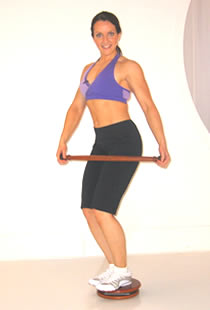
By
creating a firm and strong stomach, you will stabilize the
spine so it acts like a solid foundation for sustaining a
good body posture. Core exercise will also tone your torso
and abs and keep your lower back healthy, by improving your
posture.
By helping you to function better and improving your posture,
an effective core exercises program can help stave off painful
and debilitating problems. The goal of core training is to
work the area that supports your trunk and spine.Regardless
your age or physical activity, it’s crucial to develop
strong core muscles because they comes into play, just about
every time you move any part of your body.
There
are sound and valid anatomical reasons for doing core strengthening,
which are easy to see, once you understand the relationship
between the stomach muscles and the spine. A strong, stable
core can make any sport, like tennis, running, swimming, golf
and skating, easier. For example, if your spine acts as a
powerful base for your legs, you will be able to put more
power behind each movement of body with less effort.
If
your core is strong, your lower AB muscles will be drawn in
towards the spine and help you sit up straight. In essence,
core training is an intelligent training structure, because
it strengthens weak muscles and imbalances from the inside
out.
Important
Facts
"Back
injuries account for nearly 20% of all injuries and illnesses
in the workplace in North America." - The National
Institute for Occupational Safety and Health
"Chronic back pain is said to account for more than
$2.5 billion lost to the British economy each year"
- The British Medical Journal
"Cardiovascular Disease (CVD) continues to be one of
the leading causes of death and morbidity among adult."
- Canadian Association of Cardiac Rehabilitation
"Excess weight and lack of basic abdominal strength
put extra stress on the lower back; back injuries are still
the second leading cause of work absenteeism."
- The National Institute for Occupational Safety and Health
Bring Your Body Back to Health!
Oswaldo
Koch is an engineer, fitness trainer, inventor, MBA, IT expert.
For 25 years, Oswaldo has focused his entire agenda around
fitness programs for helping people create lush lives of health
and optimal fitness.
At
the age of 50, Oswaldo feels healthier and stronger than ever
before. The experience of the accident and painful recovery
helped him to understand and incorporate two new and key elements
in his Master Moves practice - relaxation and respect. Since
then, Master Moves has evolved into one of the most complete
fitness training systems in the world.
Get
Inspired ...Click Here
Four
Core Training Programs
Based
on your fitness level, the goal of our fitness programs is
to work the area that supports your trunk and spine. By creating
a firm, lean and strong core muscles, you will stabilize the
spine so it acts like a solid foundation for sustaining a
good body posture and outanding fitness level.
Sign
up for our free email newsletter and learn how to live a healthy
and prosperous life. Our videos and articles will inspire and
guide you to eat the right foods, get fit and look fabulous. Your
success is our success!




 BODY FLEXIBILITY
 Many
people are unaware of the fact that the order in which you perform
your stretching exercises is important. Quite often, when we perform
a particular stretch, it actually stretches more than one group
of muscles: the muscles that the stretch is primarily intended for,
and other supporting muscles that are also stretched but which do
not receive the "brunt" of the stretch.
Many
people are unaware of the fact that the order in which you perform
your stretching exercises is important. Quite often, when we perform
a particular stretch, it actually stretches more than one group
of muscles: the muscles that the stretch is primarily intended for,
and other supporting muscles that are also stretched but which do
not receive the "brunt" of the stretch. How
to measure Your Flexibility?
How
to measure Your Flexibility? or
sudden twisting movement that might happen in the course of practicing
sports, dancing or daily activities.
or
sudden twisting movement that might happen in the course of practicing
sports, dancing or daily activities.