Core
Nutrition
 Most
people begin an exercise program designed for weight loss with
the intention of sticking with it. However, the majority give
up after six months, deciding they simply don't have the time
to exercise regularly. Losing
weight and keeping it off is a real challenge for most people.
That's why it's important to exercise daily and have a balanced
nutrition program. Balance nutrition is very simple, a little
planning and picking up some healthy snacks can prevent your stomach
from steering you into a really unhealthy food choice.
Most
people begin an exercise program designed for weight loss with
the intention of sticking with it. However, the majority give
up after six months, deciding they simply don't have the time
to exercise regularly. Losing
weight and keeping it off is a real challenge for most people.
That's why it's important to exercise daily and have a balanced
nutrition program. Balance nutrition is very simple, a little
planning and picking up some healthy snacks can prevent your stomach
from steering you into a really unhealthy food choice. We
can help you find ways to decrease calories but still consume
the foods you enjoy. We can suggest daily exercises to help you
change old habits for new ones. It's important to remember that
losing even a relatively small amount of weight can make a real
improvement in reducing your risk for diabetes and other serious
conditions.
There
are three universal principles that apply to anyone:
balance, moderation and consistency.
With
all the different exercises programs and diets out there right
now, it's easy to become confused about what to eat. Pick up almost
any magazine and you will find an article on dieting or food.
What I find astonishing is that everybody seems to have a different
answer. Who do you believe? Everybody is different, so I cannot
answer that question. But I believe there are three universal
principles that apply to anyone: balance, moderation and consistency.
For instance, when we talk about following a diet: Balance
means getting the right combination of protein, carbohydrates,
and fat in your meals. Moderation means eating
the correct quantity of food required by your body to perform
with great efficiency. Consistency means developing
the discipline to follow your diet on a daily basis.
Balance
Carbohydrates
- Carbohydrates are our primary source of energy; they should
be carefully selected and included in each meal. The average diet
has too many refined carbohydrates. Technology has increased the
degree to which foods are refined, and the result is too much
low-fibre, high carbohydrate food. Eat more unrefined carbohydrates
such as whole grains, beans, vegetables and fruits. Eat fewer
refined carbohydrates such as flour and sugar.
Protein
- Most people tend to neglect their protein consumption. Everyone
(not just bodybuilders!) needs protein to survive. Without protein,
muscles cannot repair and they begin to break down. Eat more protein
from sources like fish, chicken, turkey, and beans. Eat less protein
from high-fat sources of red meat and dairy products.
Fat
- Fat is essential. In the quest for a low-fat diet, we have forgotten
about essential fatty acids (EFA's), which are the "good" fats.
EFA's are responsible for numerous bodily functions. The "bad"
fats are the saturated fats; they are responsible for heart disease
and high cholesterol. Eat more EFA's from sources like fish, nuts,
seeds, and olive oil. Try to eat fewer saturated fats from sources
like butter, sunflower oil, and cheese. When one of the above
nutrients is missing or in excess, it creates an imbalance. Finding
a balance among carbohydrates, protein and fat is a personal process.
Some people have a higher metabolic rate and need more energy
from carbohydrates and fat. Others need fewer carbohydrates because
they have a sluggish metabolism. Experiment with different ratios,
but as a general rule, eat more carbohydrates than protein.
Moderation
The massive
quantity of food available makes it very easy to overeat. You
have to learn to eat portions that are the right size for your
needs. A professional athlete that trains every day for hours
will need a lot more food than someone who sits at a desk all
day. Eat only until you feel satisfied, not to the point of feeling
"stuffed". Remember that your body requires only enough food to
meet its energy requirements; anything else is excess calories.
With this simple fact in mind, eat portions that are consistent
with your weight goals. Eat less if you are trying to lose body
fat, and eat more if you are trying to gain muscle. Remember to
maintain balance, do not cut out all the fat in your diet in order
to eat less.
Consistency
Applying
the principles of balance and moderation to your meals is useless
unless you apply them with consistency. Developing a lean, healthy
body is a long-term process that requires discipline. If you eat
a moderate, balanced diet only sometimes, it is almost impossible
to make improvements in your health and fitness. This does not
mean that you can never eat candy again. It just means that you
should make them an occasional treat. The key is to maintain balance
and moderation in the long-run.
Finding
YOUR eating plan is a process of trial and error. I am confident
that if you follow the principles of balance, moderation and consistency,
you will succeed.







 By
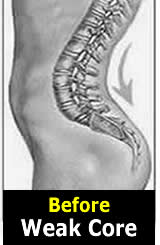
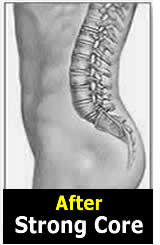
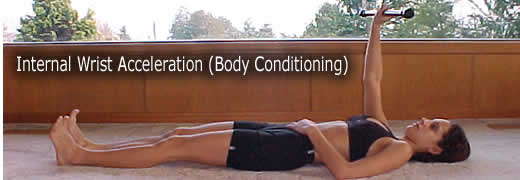
creating a firm and strong stomach, you will stabilize the
spine so it acts like a solid foundation for sustaining
a good body posture. Core exercise will also tone your torso
and abs and keep your lower back healthy, by improving your
posture.
By
creating a firm and strong stomach, you will stabilize the
spine so it acts like a solid foundation for sustaining
a good body posture. Core exercise will also tone your torso
and abs and keep your lower back healthy, by improving your
posture.